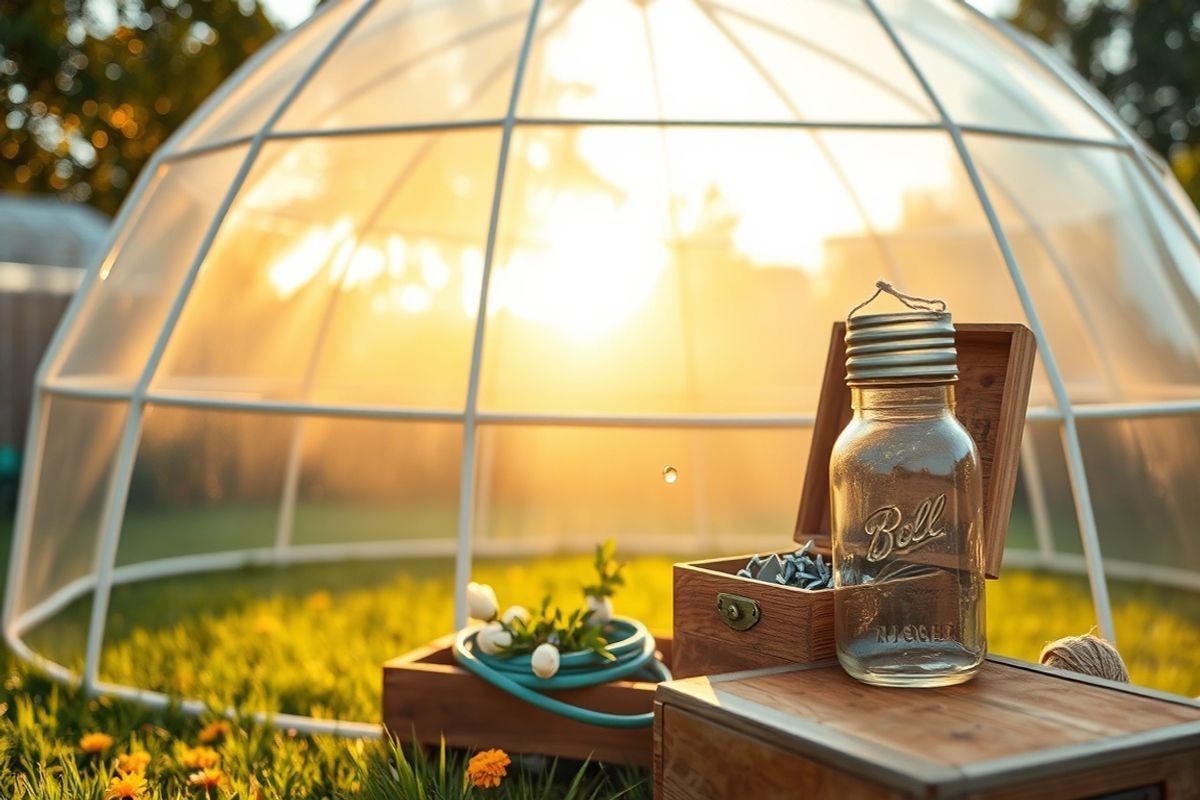
Are you dreaming of a sturdy, cost-effective greenhouse that maximizes sunlight while withstanding the elements? A PVC geodesic dome greenhouse might be the perfect solution! This innovative structure is not only visually striking but also highly efficient, providing ample space for your plants while minimizing material costs. Whether you're a seasoned gardener or a beginner, building a geodesic dome greenhouse with PVC pipes is a rewarding project that can extend your growing season and protect your plants from harsh weather. In this tutorial, we’ll walk you through the entire process—from gathering materials to assembling your dome—so you can create a thriving greenhouse with ease.
Materials Needed
- PVC pipes: ½-inch or ¾-inch diameter (lengths depend on your dome size; typically 4-6 feet per pipe).
- PVC connectors: Elbow joints (22.5° or 30°), T-joints, and possibly reducing tees, depending on your design.
- Plywood or base ring: For the foundation (optional but recommended for stability).
- Plastic sheeting or polycarbonate panels: For the dome’s covering (choose UV-resistant material for longevity).
- Zip ties or heavy-duty tape: To secure the covering to the frame.
- Ventilation components: Small hinged windows, vents, or a fan (optional but recommended).
- Door frame: PVC or wood to create an entrance (or use a pre-made greenhouse door).
- Screws, bolts, or cable ties: For securing joints and connections.
- Measuring tape, saw, and drill: For cutting and assembling the frame.
- Optional extras: Paint or sealant to protect the PVC from UV damage, a drip irrigation system, or shelving for plants.
Preparation Steps
Step 1: Plan Your Dome’s Size and Frequency
Geodesic domes are categorized by their frequency, which determines the number of struts and triangles in the structure. A 2V (2-frequency) dome is the simplest for beginners, using 65 struts (pipes) and forming 35 triangular faces. For a larger greenhouse, consider a 3V or 4V dome. Use an online geodesic dome calculator (like the one from Desert Domes) to determine the exact lengths and angles for your struts based on your desired diameter (common sizes range from 8 to 20 feet).
Sketch your design on paper or use software like SketchUp to visualize the structure. Ensure your site is level, receives ample sunlight, and has good drainage. A concrete slab or compacted gravel base works well for stability.
Step 2: Cut the PVC Pipes and Prepare Connectors
Once you’ve calculated the required strut lengths, cut the PVC pipes accordingly. Use a miter saw or PVC cutter for clean edges. Label each pipe and connector piece to avoid confusion during assembly. For a 2V dome with a 10-foot diameter, you’ll typically need:
- 35 short struts (e.g., 3 feet long).
- 30 long struts (e.g., 4 feet long).
- 65 PVC connectors (elbows and T-joints).
Sand the cut edges to remove burrs and ensure a snug fit with the connectors. If using plywood for the base, cut a circular ring to match the dome’s footprint, drilling holes for the bottom struts to anchor the structure.
Assembly
Step 3: Build the Base and Lower Struts
Start by assembling the base ring (if using one). Lay the plywood ring on a flat surface and mark the positions for the bottom struts. Drill holes at these points and insert the bottom short struts vertically, securing them to the ring with screws or bolts. These struts will support the dome’s weight and anchor it to the ground.
Next, attach the bottom long struts horizontally to the top of the vertical struts using 22.5° or 30° elbow connectors. These will form the first layer of triangles. Ensure the angles are consistent to maintain the dome’s symmetry. Use a level to check for plumbness as you go.
Step 4: Construct the Dome’s Framework
Working in sections, assemble the upper struts by connecting the long and short struts with T-joints and elbows. Follow your pre-labeled pieces to ensure accuracy. Start from the base and work your way up, forming pentagons and hexagons (the dome’s characteristic shapes).
Use temporary supports (like wooden stakes or a central pole) to hold the structure in place while you assemble it. This prevents the dome from collapsing during construction. As you near the top, install a keystone hub (a central connector) to join the upper struts. Secure all joints tightly with screws or cable ties to prevent shifting.
Once the frame is complete, reinforce critical joints with additional PVC cement or metal brackets for extra stability. Test the structure’s rigidity by gently shaking it—if it wobbles, tighten the connections or add more supports.
Adding the Covering
With the frame standing strong, it’s time to add the covering. Stretch plastic sheeting or polycarbonate panels over the dome, starting from the bottom and working upward. Secure the material with zip ties, staples, or heavy-duty tape, pulling it taut to avoid sagging. For polycarbonate panels, pre-drill holes and use rubber grommets to prevent cracking.
Create a door by leaving an opening in the covering or installing a PVC door frame. Add ventilation by cutting small windows covered with mesh or installing a vent fan near the top of the dome (heat rises, so this is ideal for airflow).
Mistakes to Avoid
- Skipping the base ring: Without a solid foundation, your dome may shift or collapse in windy conditions.
- Using incorrect angles: Even a slight misalignment in connectors can distort the dome’s shape, leading to gaps or instability.
- Over-tightening or under-tightening joints: Joints should be snug but not so tight that they crack the PVC. Use a rubber mallet to adjust if needed.
- Ignoring ventilation: Poor airflow can lead to overheating, humidity buildup, and plant diseases. Plan vents early in the design.
- Choosing low-quality materials: Opt for UV-resistant plastic and sturdy PVC to ensure your greenhouse lasts for years.
Pro Tips
- Use a central hub: A 3D-printed or wooden hub can simplify the assembly of upper struts and improve structural integrity.
- Add shelves or hanging baskets: Maximize space by installing removable shelves or hooks for trays and tools.
- Paint the PVC: A coat of outdoor paint or UV-protective spray can extend the life of your greenhouse by preventing sun damage.
- Automate watering: Install a drip irrigation system or self-watering pots to reduce maintenance.
- Insulate the base: In colder climates, add a layer of insulation (like rigid foam) around the base to retain heat.
- Experiment with shapes: Try a geodesic half-dome against a wall or combine multiple domes for a larger greenhouse complex.
With your PVC geodesic dome greenhouse complete, you’re ready to enjoy year-round gardening! This versatile structure is perfect for growing vegetables, herbs, or even tropical plants. Monitor temperature and humidity levels, and adjust ventilation as needed to create the ideal environment for your crops. Share your project with fellow gardeners or modify the design to suit your needs—after all, the possibilities are as endless as the dome itself!
Happy building, and may your greenhouse thrive with lush, healthy plants!