Introduction
Materials Needed
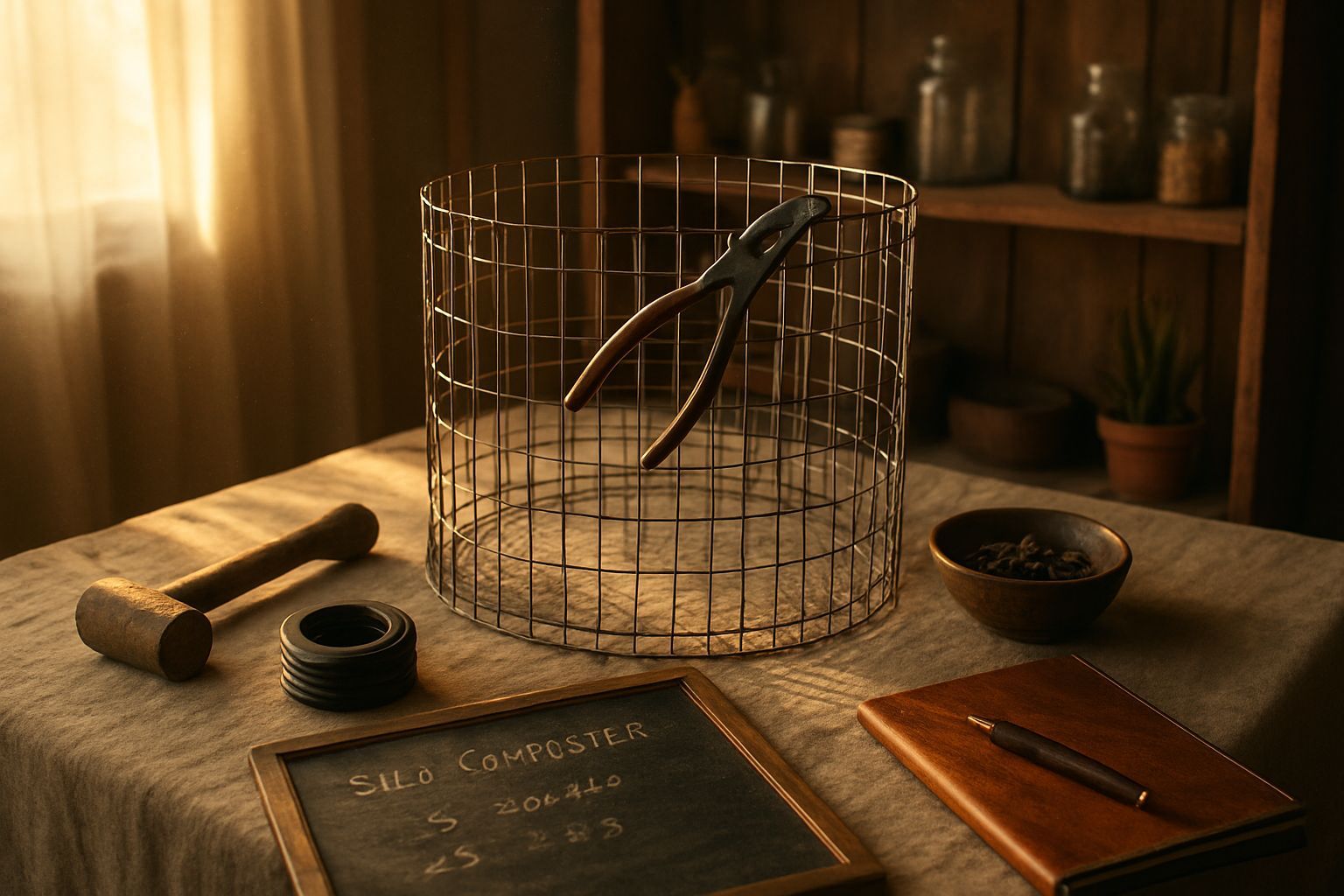
- Wire mesh (hardware cloth or chicken wire, 1/2-inch or 1-inch openings)
- Galvanized steel wire or zip ties
- Staple gun and staples (optional)
- Wooden stakes or rebar (for anchoring)
- Hammer or mallet
- Measuring tape
- Scissors or wire cutters
- Gloves (for safety)
Preparation Steps
Step 1: Choose the Right Location
Select a flat, well-drained area in your yard that receives partial sunlight. Avoid placing the composter near trees or structures that may cast too much shade.
Step 2: Gather and Prepare Materials
Ensure all materials are clean and in good condition. Cut the wire mesh to the desired height and width (typically 3-4 feet in diameter and 3-4 feet tall).
Assembly
Step 3: Form the Silo Shape
Bend the wire mesh into a cylindrical shape. Overlap the edges by about 6 inches and secure them with galvanized steel wire or zip ties. Ensure the structure is sturdy and evenly shaped.
Step 4: Anchor the Silo
Drive wooden stakes or rebar into the ground around the base of the silo. Secure the wire mesh to the stakes using wire or zip ties. This prevents the composter from toppling over.
Mistakes to Avoid
Do not use wire mesh with large openings, as it may allow small animals to enter. Avoid overfilling the composter, as this can cause compaction and slow down decomposition. Ensure proper aeration by turning the compost regularly.
Pro Tips
Add a layer of brown materials (like leaves or shredded paper) between layers of green materials (like kitchen scraps) to balance the carbon-to-nitrogen ratio. Keep the compost moist but not soggy. Cover the top with a tarp during heavy rain to prevent waterlogging.
Conclusion