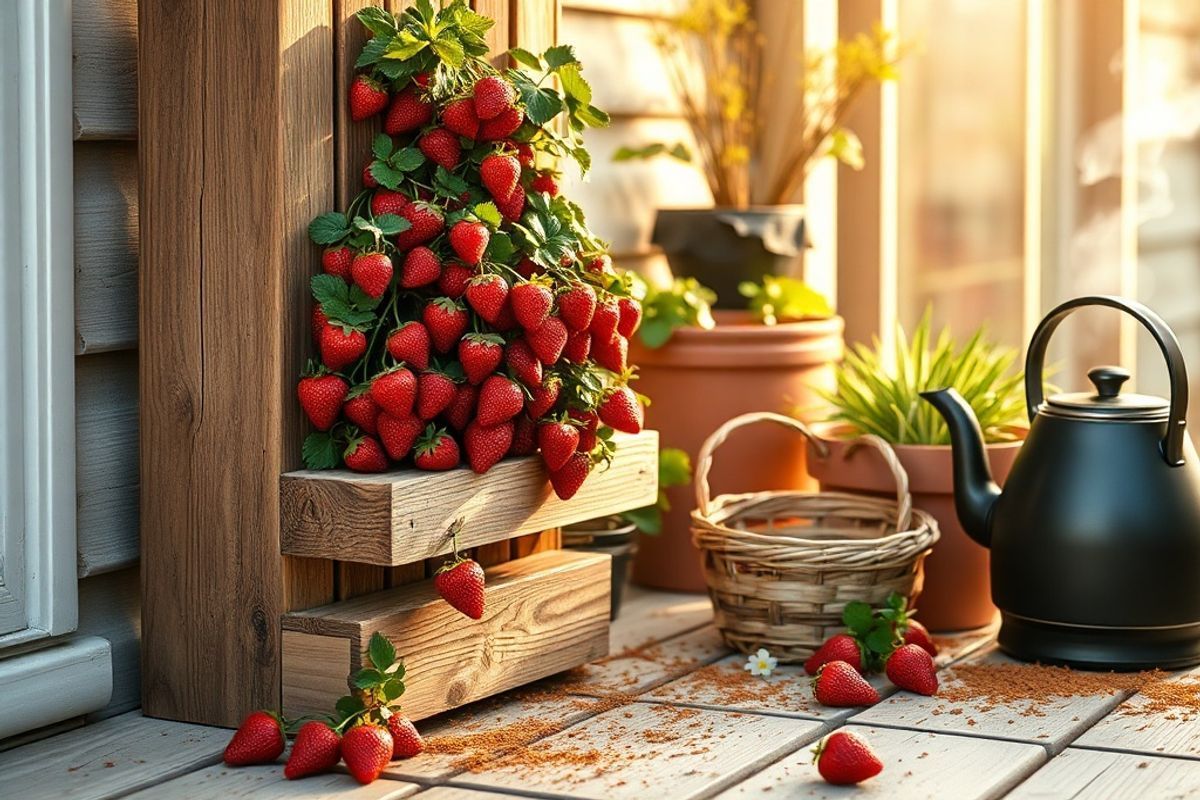
Growing strawberries vertically is a game-changer for gardeners with limited space. Whether you’re working with a small balcony, a tiny patio, or just want to maximize your garden’s yield, a vertical strawberry tower lets you cultivate more plants in less space. These space-efficient towers not only save room but also improve air circulation, reduce disease risk, and make harvesting easier. Plus, they look fantastic as a living garden structure!
In this guide, we’ll walk you through how to build a sturdy and attractive vertical strawberry tower using affordable materials. Whether you’re a beginner or a seasoned gardener, this DIY project is simple, rewarding, and perfect for growing fresh, juicy strawberries at home.
Materials needed
- PVC pipes (2–4 inch diameter, depending on your design; 6–8 feet total length)
- End caps matching your pipe diameter (2 caps)
- Drill with hole saw or spade bit (size to match your strawberry pots or net pots)
- Strawberry pots or net pots (6–12 pots, 3–5 inches in diameter)
- PVC cement or waterproof glue (optional for extra stability)
- Landscape fabric or coconut coir (to line the inside of pots)
- Potting mix (lightweight, well-draining soil)
- Strawberry plants (healthy, disease-free runners or young plants)
- Watering can with a narrow spout or drip irrigation kit (optional)
- Zip ties or wire (to secure pots to the tower)
- Measuring tape, pencil, and level
You can find most of these materials at garden centers, hardware stores, or online. Using recycled materials like old buckets or fabric grow bags can also help reduce costs and add a rustic touch to your design.
Preparation steps
Step 1: Plan your tower design
Decide on the height and diameter of your tower based on your space and how many strawberries you want to grow. A typical vertical strawberry tower is about 3–5 feet tall and 12–18 inches wide. You can build a single tower or stack multiple shorter sections for a modular design.
Consider the location: Choose a spot with at least 6–8 hours of sunlight per day. Strawberries need full sun to produce sweet fruit. Also, ensure the tower is stable and level to prevent leaning or tipping over in wind or during watering.
Step 2: Cut the PVC pipe and mark planting holes
Cut your PVC pipe into sections according to your design. For a 4-foot tower, you might use one 4-foot pipe or two 2-foot sections connected with couplings.
Use a measuring tape to mark evenly spaced holes around the pipe. The spacing depends on the size of your pots. For 4-inch pots, space the holes about 6–8 inches apart vertically and offset them horizontally so each pot has space without blocking others. A staggered pattern works best to allow light and air to reach all plants.
Use a hole saw or spade bit to drill the holes. Smooth the edges with sandpaper to prevent tearing the pots or injuring your hands.
Assembly
Step 3: Insert pots and secure them
Insert your strawberry pots or net pots into each hole. If using landscape fabric or coconut coir, cut it to line the inside of each pot to keep soil in place and prevent spills.
Use zip ties, wire, or strong tape to secure each pot to the pipe. Make sure they’re firmly attached but not crushed—strawberry roots need room to grow. For extra stability, you can use PVC cement to glue the end caps onto the bottom of the tower, creating a closed reservoir that slowly waters plants from below.
Step 4: Add soil and plant your strawberries
Fill each pot with a high-quality potting mix formulated for containers. Avoid garden soil, which can compact and block drainage. You can mix in a bit of compost or slow-release fertilizer for extra nutrients.
Carefully remove your strawberry plants from their containers, loosen the roots, and plant them in the pots. Space them so foliage doesn’t overlap—this improves air flow and reduces disease. Water each plant thoroughly after planting to help them settle in.
If you used PVC cement, wait 24 hours before watering to allow it to fully cure. Otherwise, your tower is ready to go!
Mistakes to avoid
- Choosing the wrong soil: Heavy or compacted soil leads to poor drainage and root rot. Always use a lightweight, well-draining potting mix.
- Overcrowding plants: Too many strawberries in one tower can lead to competition for light and nutrients, and increase the risk of pests and disease. Follow spacing guidelines.
- Ignoring drainage: Without proper drainage holes, water pools at the bottom, drowning roots. Ensure each pot has drainage holes and the tower itself allows excess water to escape.
- Skipping the support: A tall, top-heavy tower can tip over. Anchor it to a fence, wall, or stake, or place it in a container filled with concrete for extra weight.
- Planting without sunlight: Strawberries need full sun. If your tower is in shade, move it or choose a more suitable location.
- Use a self-watering system: Add a PVC pipe or tube down the center of your tower to deliver water directly to the roots. This keeps plants hydrated without overwatering the surface.
- Rotate your tower: If your tower is mobile, turn it a quarter turn every few days so all sides get equal sunlight.
- Mulch the surface: Cover the soil in each pot with a thin layer of straw or wood chips to retain moisture and prevent weeds.
- Fertilize regularly: Use a balanced, water-soluble fertilizer every 2–4 weeks during the growing season to promote fruiting.
- Choose everbearing varieties: For a continuous harvest, plant varieties like ‘Albion’, ‘Seascape’, or ‘Tristar’, which produce fruit throughout the season.
- Monitor for pests: Slugs, snails, and birds love strawberries. Use organic pest control like copper tape or bird netting to protect your harvest.
- Winter care: In cold climates, move your tower indoors or cover it with frost cloth. Strawberries are perennial but may need protection in freezing temperatures.
Pro tips
With a well-built vertical strawberry tower, you’ll enjoy a bountiful harvest in a fraction of the space. These towers are not only functional but also add a beautiful vertical element to any garden or patio.
Start small, experiment with designs, and most importantly—have fun growing your own strawberries in style!