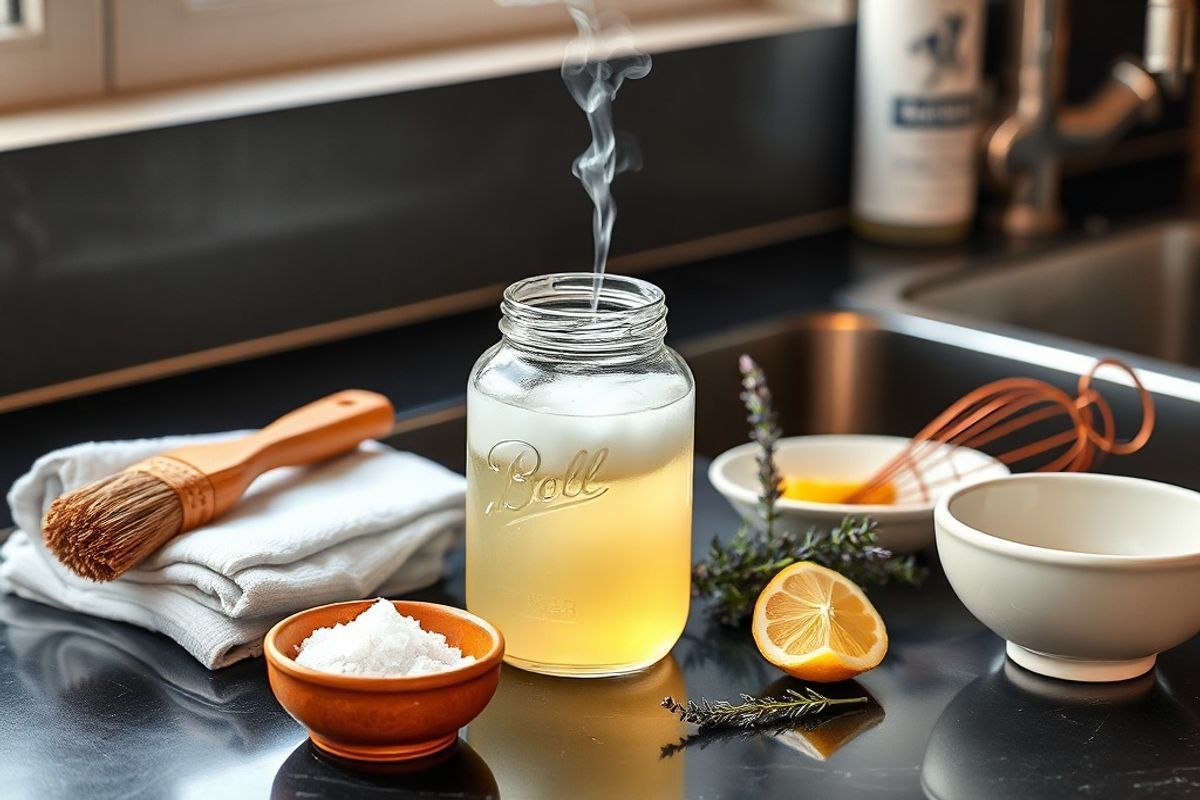
An immersion blender, or stick blender, is a kitchen essential for whipping up soups, sauces, smoothies, and more. But cleaning it can be a nightmare—blades, crevices, and detachable parts trap food particles and grease, making it difficult to keep hygienic. Store-bought cleaners often contain harsh chemicals that aren’t great for your health or the environment. That’s why we’re sharing a simple, homemade immersion blender cleaner that’s safe, effective, and budget-friendly.
Materials needed
- White vinegar (natural disinfectant and degreaser)
- Baking soda (gentle abrasive and odor neutralizer)
- Lemon juice or citric acid (cuts through grease and adds freshness)
- Dish soap (for cutting through oils)
- Warm water (to dilute and rinse)
- Soft-bristle brush or old toothbrush (for scrubbing hard-to-reach areas)
- Microfiber cloth or sponge (for drying)
- Small bowl or container (for soaking)
- Optional: Essential oils (e.g., tea tree or lemon for antibacterial properties)
Preparation steps
Step 1: Unplug and disassemble
Safety first! Always unplug your immersion blender before cleaning to avoid accidents. Then, detach the blending shaft (if your model allows) and any removable parts like the protective guard or lid. Most immersion blenders have a detachable shaft—check your user manual if unsure. Remove any food debris trapped in the blade area by gently tapping the shaft or using a dry brush.
Step 2: Pre-soak for stubborn residue
For caked-on food, grease, or dried-on sauces, a pre-soak works wonders. Mix 1 cup of warm water with ½ cup white vinegar and 2 tablespoons of baking soda in a bowl. Submerge the blending shaft (and any detachable parts) in the solution. Let it soak for 10–15 minutes. The acidity in the vinegar and the abrasive nature of baking soda will loosen grime without scratching the metal. For extra odor control or grease-cutting power, add 1 tablespoon of lemon juice or a few drops of dish soap.
Assembly
Step 3: Scrub and clean
After soaking, it’s time to scrub. Use a soft-bristle brush or an old toothbrush to gently scrub the blade and shaft, paying extra attention to the crevices and the area around the blades where food often gets trapped. Avoid using steel wool or harsh scrubbers, as they can damage the non-stick coating or leave scratches. For the shaft, run it under warm water while scrubbing to help rinse away loosened debris. If your immersion blender has a removable blending cup or lid, clean these parts separately. For the cup, add a few drops of dish soap and warm water, then scrub with a sponge. Rinse thoroughly. Pro tip: For a deeper clean, make a paste with baking soda and water and apply it to the blade area. Let it sit for 2–3 minutes before scrubbing. This paste is mild yet effective at breaking down dried-on food.
Step 4: Rinse and dry
Rinse all parts under warm running water to remove any residue from the cleaning solution. Ensure no soap or baking soda remains, as leftover residue can affect the taste of future blends. Pat dry with a microfiber cloth or let air-dry on a drying rack. Avoid towels that can leave lint or scratches. Make sure the blade and shaft are completely dry before reassembling to prevent rust or mold growth.
Mistakes to avoid
- Don’t submerge the motor base: The motor is not waterproof. Only the blending shaft and detachable parts should be submerged or rinsed. Wipe the motor base with a damp cloth instead.
- Avoid harsh chemicals: Bleach, steel wool, or abrasive cleaners can damage the blender’s finish and leave toxic residue. Stick to natural ingredients like vinegar, baking soda, and lemon.
- Don’t let food dry: Clean your immersion blender immediately after use to prevent food from hardening and becoming difficult to remove. A quick rinse and wipe-down go a long way.
- Skip the dishwasher: Most immersion blender parts are not dishwasher-safe. The high heat and strong detergents can warp plastic parts and dull blades.
- Don’t ignore the gasket: If your blender has a rubber gasket (where the shaft meets the motor), clean it gently with a damp cloth and mild soap. Avoid soaking it to prevent swelling or damage.
Pro tips
- Daily maintenance: After each use, give your immersion blender a quick rinse under warm water and wipe it down with a soapy sponge. This prevents buildup and makes deep cleaning easier.
- Deodorize naturally: To eliminate lingering odors, soak the shaft in a mixture of warm water and lemon peels for 10 minutes before scrubbing. The citrus will freshen and disinfect.
- Sanitize for extra hygiene: For a deeper sanitizing clean, add 1 tablespoon of hydrogen peroxide to your soaking solution. This kills bacteria and viruses effectively without harsh chemicals.
- Store properly: After cleaning, store your immersion blender upright in a dry place. If it’s stored in a drawer, use a soft cloth to wrap the blade to prevent scratches or accidental cuts.
- Revive dull blades: Over time, blades can lose their sharpness. Soak them in white vinegar for 30 minutes to remove mineral deposits and restore shine. Avoid using them for tough ingredients like ice or frozen fruit until they’re sharp again.
- Customize your cleaner: Experiment with your cleaner recipe based on your needs:
- Greasy residue? Add more dish soap or citric acid.
- Hard water stains? Use a 50/50 vinegar and water solution to dissolve limescale.
- Persistent odors? Add a few drops of tea tree or eucalyptus essential oil for their antibacterial properties.
- Test on a small area first: If you’re unsure about your blender’s material, test the cleaner on a small, hidden part (like the underside of the shaft) to ensure it doesn’t cause discoloration or damage.
Regular cleaning not only extends the life of your immersion blender but also ensures your blends taste fresh and clean. With this homemade cleaner, you’ll avoid the hassle of scrubbing dried-on food and the worry of chemical residues in your food.
By following these steps and tips, your immersion blender will remain in top condition, ready to tackle your next culinary adventure—whether it’s a velvety soup, a vibrant smoothie, or a silky sauce. Happy blending!