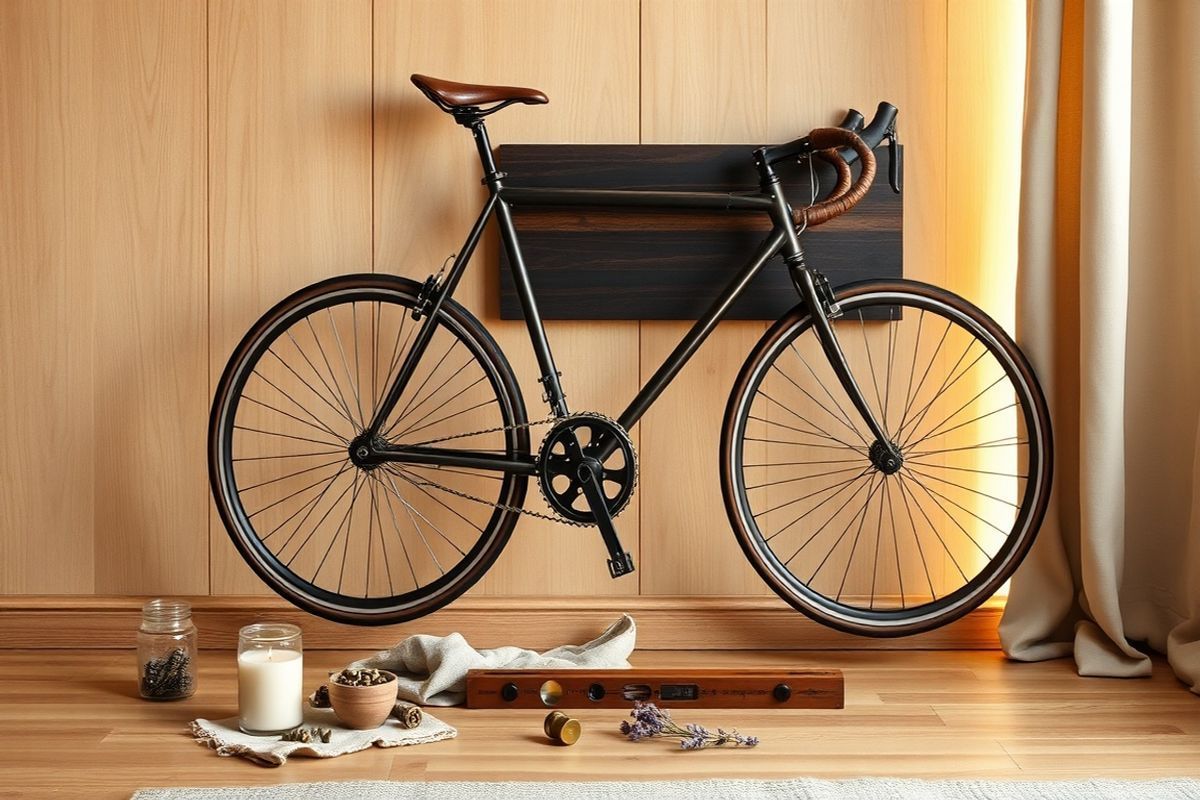
If you’re tired of your bike cluttering up your garage or hallway, a wooden wall mount is a practical and attractive solution. Not only does it free up floor space, but it also keeps your bike secure and easily accessible. Whether you’re a cycling enthusiast or just looking to organize your home better, building a wooden wall bike mount is a rewarding DIY project. This guide will walk you through the entire process, from selecting materials to final assembly, ensuring your bike stays safely mounted.
Materials Needed
Before you begin, gather all the necessary materials and tools to ensure a smooth build. Here’s what you’ll need:
- Wood:
- 1x 2x4 pine board (length depends on bike size, typically 4–6 ft)
- 1x 1x6 pine board (for the mounting plate)
- 1x 1x2 pine board (for spacers and support)
- Hardware:
- Wood screws (1.5" and 2.5")
- Heavy-duty wall anchors (if mounting into drywall)
- L-brackets (optional, for extra support)
- Tools:
- Measuring tape
- Pencil
- Safety glasses
- Drill with drill bits
- Screwdriver or impact driver
- Miter saw or handsaw
- Sandpaper (120-grit)
- Stud finder (if mounting into wall studs)
- Level
- Finishing Supplies (optional):
- Wood stain or paint
- Clear polyurethane or varnish
- Paintbrush or rag
Preparation Steps
Proper preparation is key to a successful and safe installation. Follow these steps before assembling your bike mount.
Step 1: Measure Your Bike and Wall Space
Start by measuring your bike’s wheelbase and width to determine the required dimensions for the mount. A standard road bike wheelbase is about 40–44 inches, while mountain bikes may be slightly shorter. Mark the desired height on the wall where the center of the wheel will sit—typically 4–5 feet from the floor for easy access.
Use a stud finder to locate wall studs behind the drywall. Mounting into studs provides maximum strength. If studs aren’t available, use heavy-duty wall anchors rated for at least 50 lbs per anchor.
Step 2: Cut the Wood Pieces
Based on your measurements, cut the wood pieces using a miter saw or handsaw. You’ll need:
- One vertical 2x4 board cut to the desired height (e.g., 48 inches)
- One horizontal 1x6 board cut to match your bike’s handlebar width (typically 12–18 inches)
- Two 1x2 spacers cut to 2–3 inches in length (for vertical support)
Sand all cut edges and surfaces with 120-grit sandpaper to prevent splinters and ensure a smooth finish.
Assembly
With your materials ready, it’s time to assemble the bike mount. Follow these steps carefully.
Step 3: Attach the Horizontal Mounting Plate
Place the 1x6 horizontal board (mounting plate) on a flat surface. Position the vertical 2x4 board flush against the center of the 1x6 board. This will form a "T" shape.
Pre-drill holes through the 2x4 into the 1x6 to prevent wood splitting. Use 2.5" wood screws to secure the vertical board to the horizontal plate. Drive 2 screws on each side, spacing them evenly.
Add the two 1x2 spacers vertically between the 2x4 and 1x6, one on each side, flush with the top and bottom edges. These spacers will create a small gap, allowing the bike wheel to rest securely against the wall without touching the mounting plate directly. Secure them with 1.5" screws.
Step 4: Reinforce and Finish
For added stability, consider adding L-brackets to the back of the vertical 2x4. Attach them with screws into both the wood and the wall for extra support.
Apply wood stain, paint, or varnish to the mount for a polished look. Let it dry completely before installation. This step not only enhances appearance but also protects the wood from moisture and wear.
Mounting the Bike Mount to the Wall
With the mount assembled, it’s time to install it on the wall.
- Locate the Studs: Use your stud finder to mark the positions of studs on the wall. Align your mount so that at least one stud is behind the vertical 2x4.
- Hold the Mount in Place: Position the mount against the wall, ensuring it’s level. Use a level to confirm both vertical and horizontal alignment.
- Mark the Screw Holes: Through the pre-drilled holes in the 2x4, mark the wall with a pencil where screws will go.
- Drill Pilot Holes: Drill pilot holes into the wall at your marked spots. If you’re not hitting studs, insert heavy-duty wall anchors into the pilot holes.
- Attach the Mount: Secure the mount to the wall using 2.5" wood screws. Tighten them firmly, but avoid over-tightening to prevent wood splitting.
- Test Stability: Gently tug on the mount to ensure it’s securely fastened. The mount should not wobble or shift when pressure is applied.
Mounting Your Bike
Now that your wooden wall mount is installed, it’s time to hang your bike.
- Lift the Bike: Carefully lift the bike and position one wheel between the spacers and the vertical board. The wheel should rest against the 2x4, with the frame leaning slightly against the mounting plate.
- Secure the Frame: Use a soft cloth or foam padding between the bike frame and the wood to prevent scratches. Some cyclists add a hook or strap to the top of the mount to secure the frame and prevent it from sliding.
- Test the Position: Ensure the bike is stable and doesn’t wobble when pressure is applied. Adjust the wheel position if needed.
Mistakes to Avoid
Even with careful planning, common mistakes can compromise the safety and longevity of your bike mount. Here’s what to watch out for:
- Skipping the Stud Finder: Mounting only into drywall without anchors or studs risks the mount pulling out under the bike’s weight. Always secure into studs or use proper anchors.
- Using Weak Wood Screws: Standard screws may not hold the weight of a bike. Use 2.5" or longer screws rated for wood framing.
- Not Sanding the Wood: Rough edges can damage your bike’s paint or frame. Always sand all cut surfaces before assembly.
- Incorrect Spacing: If the gap between the vertical board and the wall is too large, the wheel may not sit securely. Aim for 1–2 inches of clearance.
- Overloading the Mount: Avoid hanging heavy bikes (e.g., e-bikes) on a standard wooden mount. Consider upgrading to a metal bracket or commercial bike hook for heavier bikes.
Pro Tips
Take your wooden bike mount to the next level with these expert suggestions:
- Add a Hook: Install a simple hook at the top of the mount to secure the bike frame and prevent it from shifting or falling.
- Use Padding: Place foam or rubber padding between the bike and the wood to protect the frame and reduce noise when moving the bike.
- Label Your Bike: If you have multiple bikes, add small tags or labels to the mount for easy identification.
- Incorporate Shelving: Below the bike mount, add a small shelf or hooks for storing helmets, shoes, or accessories.
- Customize the Design: Add decorative elements like routed edges or stenciled patterns to match your home’s aesthetic.
- Double-Check Weight Limits: Before hanging your bike, confirm the total weight (bike + accessories) and ensure your mount and wall anchors can support it.
With proper construction and installation, your wooden wall bike mount will provide years of secure and organized storage. Whether you’re a casual rider or a seasoned cyclist, this DIY project is a practical addition to any home.
Conclusion
A wooden wall bike mount is a fantastic way to save space and keep your bike safe and accessible. By following this step-by-step guide, you can build a sturdy, stylish, and functional storage solution tailored to your space and bike size. Remember to prioritize safety by using proper hardware and ensuring a secure mount. With a little time and effort, you’ll enjoy a clutter-free garage or hallway and the satisfaction of a job well done. Happy building!