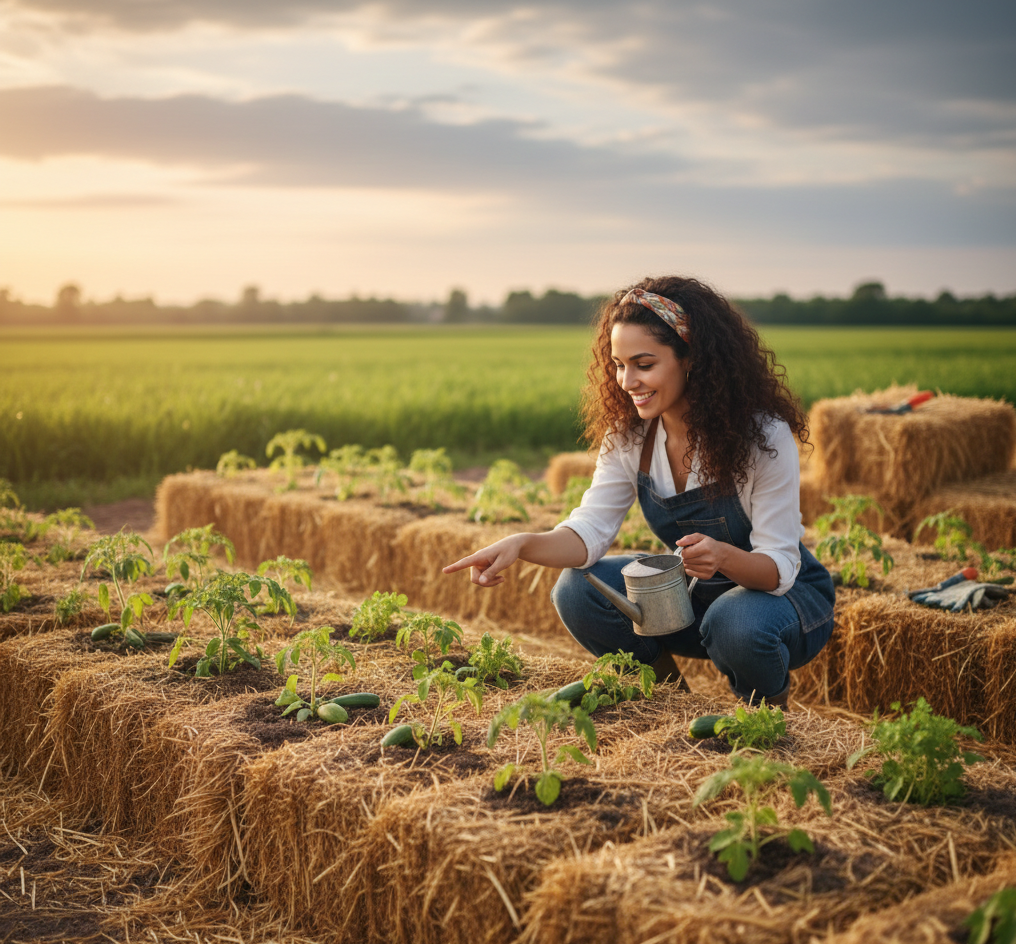
Straw Bale Gardening: Pros and Cons
Honestly, straw bale gardening is a total game changer for gardeners! 🌿 But before you jump in, I’ll break down all the details because, like everything, it’s got its pros and cons. Ready? Let’s go!
The Pros of Straw Bale Gardening
1. **Eco-Friendly and Recyclable**: Straw is all-natural, breaks down on its own, and feeds the soil. No plastic or chemicals needed. Trust me, it’s great for the planet! 🌍
2. **Water Savings**: Straw holds in moisture, so you water less often. Perfect for plants that love humidity, like tomatoes or strawberries. 💧
3. **Fewer Weeds**: Straw blocks sunlight, so weeds struggle to grow. Less weeding means less work for you! 😌
4. **Disease Protection**: Straw helps prevent soil-borne diseases like blight by keeping leaves dry. Ideal for sensitive crops. 🍅
The Cons of Straw Bale Gardening
1. **Upfront Cost**: At first, you gotta buy or scavenge straw bales, and that can get pricey if you don’t have any handy. But it pays off long-term! 💰
2. **Rodent Risk**: Mice and voles love straw. If you’re not careful, they’ll move in and mess with your plants. 🐭
3. **Quick Breakdown**: Straw decomposes fast, especially if it’s wet. You’ll need to replace it regularly to keep your plants supported. 🌱
4. **Not Ideal for Big Roots**: If you’re growing root veggies like carrots or beets, straw can get in the way. Stick to regular soil for those. 🥕
Final Verdict: Is Straw Bale Gardening Right for You?
Honestly, if you want a low-maintenance, eco-friendly garden, straw bale gardening is a total win! 🌿 But if you’re growing root crops or worried about pests, think it through. Maybe test it on a few plants first before going all-in. Have you tried it? Tell me everything! ✨