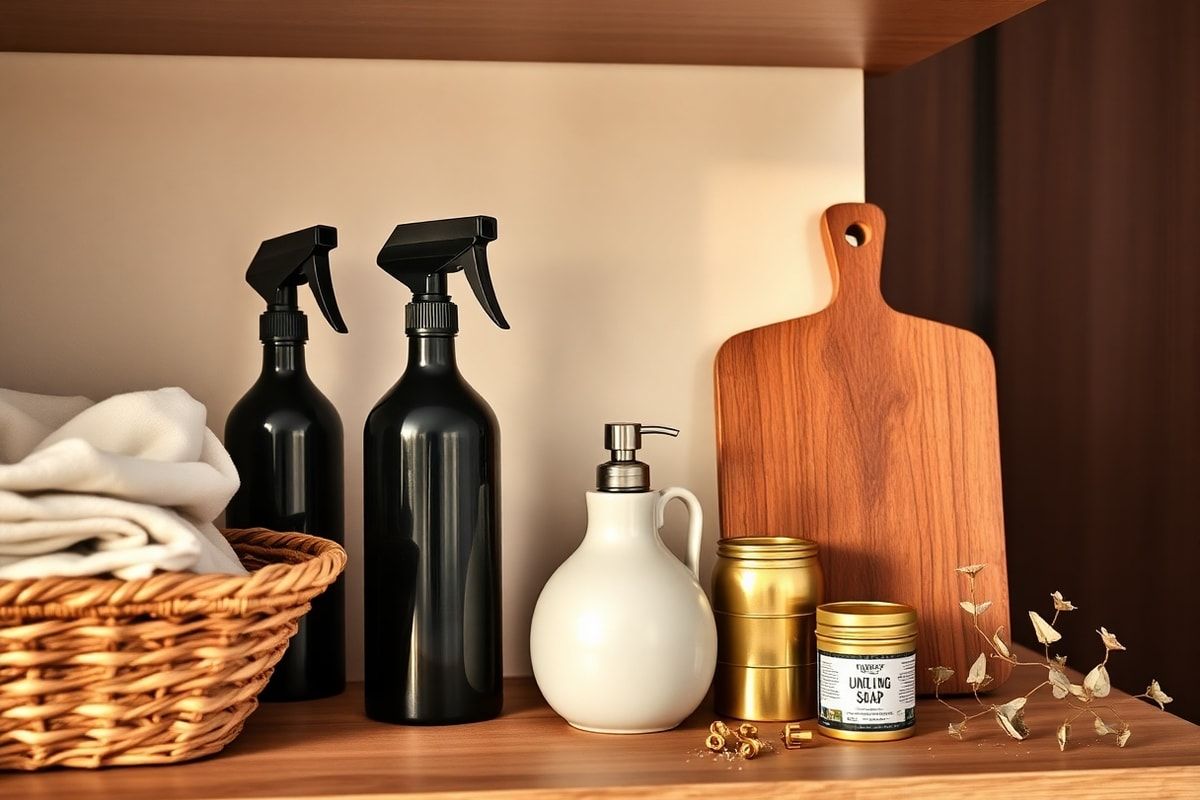
Tired of cluttered cabinets and messy cleaning supplies taking over your kitchen? Organizing cleaning products on a pantry or cabinet door is a brilliant space-saving solution that keeps your essentials within reach while freeing up valuable shelf space. Whether you're dealing with spray bottles, sponges, or small containers, a well-organized door storage system can transform your cleaning routine from chaotic to efficient.
Materials needed
- Adhesive hooks or over-the-door organizers (plastic, metal, or fabric)
- Clear or labeled storage bins or baskets (small to medium size)
- Magnetic strips (optional, for metal cans or lids)
- Command strips or heavy-duty adhesive strips (if you prefer damage-free hanging)
- Scissors or a craft knife
- Permanent marker or labels and a label maker
- Measuring tape or ruler
Choose organizers that match your door material and the weight of your products. For heavier items like bottles of bleach or large spray cleaners, opt for sturdy metal hooks or reinforced Command strips. For lighter items such as sponges, dish soap, or small containers, plastic baskets or fabric pockets work wonderfully.
Preparation steps
Step 1: Clear the Space
Start by removing all cleaning products from the cabinet or pantry where they’re currently stored. Empty the contents onto a clean surface like a table or countertop. Take this opportunity to declutter: discard expired products, empty containers, or items you no longer use. This is also a great time to group similar items together—sprays, sponges, brushes, and polishes—so you can see what you’re working with.
Step 2: Measure Your Door
Use a measuring tape to determine the width and height of your pantry or cabinet door. Pay attention to any obstructions like hinges, handles, or decorative trim. Write down the dimensions, as this will help you choose the right type and number of organizers. Most over-the-door organizers are designed to fit standard door widths, but it’s always good to double-check.
Step 3: Plan Your Layout
Before installing anything, lay out your cleaning products and visualize how they’ll fit on the door. Think about frequency of use: items you use daily (like dish soap) should be at eye level and easily accessible, while seasonal or rarely used items can go higher or lower. Consider grouping by category—for example, all spray bottles on one hook, sponges and cloths in a basket, and small containers on a magnetic strip.
Sketch a simple diagram if it helps. This planning phase will save you time and frustration during installation. Aim for a balanced look that keeps the door functional and visually appealing.
Assembly
Step 3: Install the Organizers
Begin by attaching your chosen organizers to the inside of the pantry door. If using adhesive hooks or strips:
- Clean the door surface with rubbing alcohol to remove dust or grease—this ensures maximum adhesion.
- Peel off the backing of the Command strip or adhesive hook and press firmly against the door for 30 seconds.
- Wait at least one hour before placing any weight on the hook to allow the adhesive to fully bond.
For over-the-door organizers (like fabric pockets or clear plastic bins with hanging loops), simply slide them onto the top edge of the door. These are great for lightweight items and don’t require any tools or adhesives.
If using a magnetic strip for metal cans or lids, attach it to the door using strong adhesive or screws (if the door material allows). Make sure it’s level and securely fastened.
Step 4: Arrange Your Products
Once your organizers are installed, begin placing your cleaning products in their designated spots. Use clear bins for small items like sponges, brushes, or sample-sized cleaners—this keeps everything contained and makes it easy to see what you have. Label each bin or basket with a permanent marker or printed label for a polished, professional look.
For spray bottles, hang them by their trigger handles on sturdy hooks. This prevents them from tipping over and makes them easy to grab. If you have glass bottles, consider wrapping the necks with a small piece of shelf liner or rubber band to prevent scratches on the door surface.
Organize items from left to right based on frequency of use. For example, dish soap might go on the first hook, followed by all-purpose cleaner, glass cleaner, bathroom spray, and so on. Place heavier items lower on the door to prevent tipping.
Mistakes to avoid
- Overloading hooks or baskets: Avoid hanging too many heavy bottles on a single hook. This can cause the adhesive to fail or the hook to bend. Distribute weight evenly.
- Ignoring door clearance: Make sure your organizers don’t interfere with the door swinging open or closing. Leave at least 1–2 inches of space on all sides.
- Using the wrong adhesive: Regular tape or sticky tack won’t hold the weight of cleaning products long-term. Always use heavy-duty adhesive strips or screws for heavy items.
- Skipping decluttering: Adding more storage without first removing unused items leads to clutter. Always declutter before organizing.
- Placing items randomly: Without a system, your door will quickly become messy again. Group similar items and label everything clearly.
Pro tips
- Use a tiered organizer: If your door is tall, add a small shelf or tiered basket to create more levels for storage without crowding.
- Add a small mirror or chalkboard: Attach a small mirror or chalkboard panel to the door for notes, recipes, or shopping lists—double the functionality!
- Rotate seasonal items: Store off-season cleaners (like heavy-duty oven cleaners) in a high or low bin and swap them out as needed.
- Keep a spray bottle of multi-surface cleaner handy: Place a small refillable spray bottle with a multi-surface cleaner in a top basket for quick access when wiping down counters or appliances.
- Go vertical: Use both sides of the door if space allows. Hang lightweight items on one side and heavier ones on the other, or use a double-sided organizer.
- Add a small trash can or bag holder: Attach a small wall-mounted trash can or a reusable bag holder below the organizers to collect empty bottles or used sponges.
- Use color coding: Assign a color to each category (e.g., green for kitchen cleaners, blue for bathroom) to make finding items even faster.
With your cleaning products neatly arranged on the pantry door, you’ll not only save cabinet space but also create a more efficient and visually pleasing kitchen. No more digging through crowded shelves or knocking over bottles—everything has its place, and you can grab what you need in seconds. Plus, this method works in any room where cleaning supplies are used, from the laundry room to the bathroom.
Try this setup today and enjoy a cleaner, more organized home with minimal effort. Happy organizing!