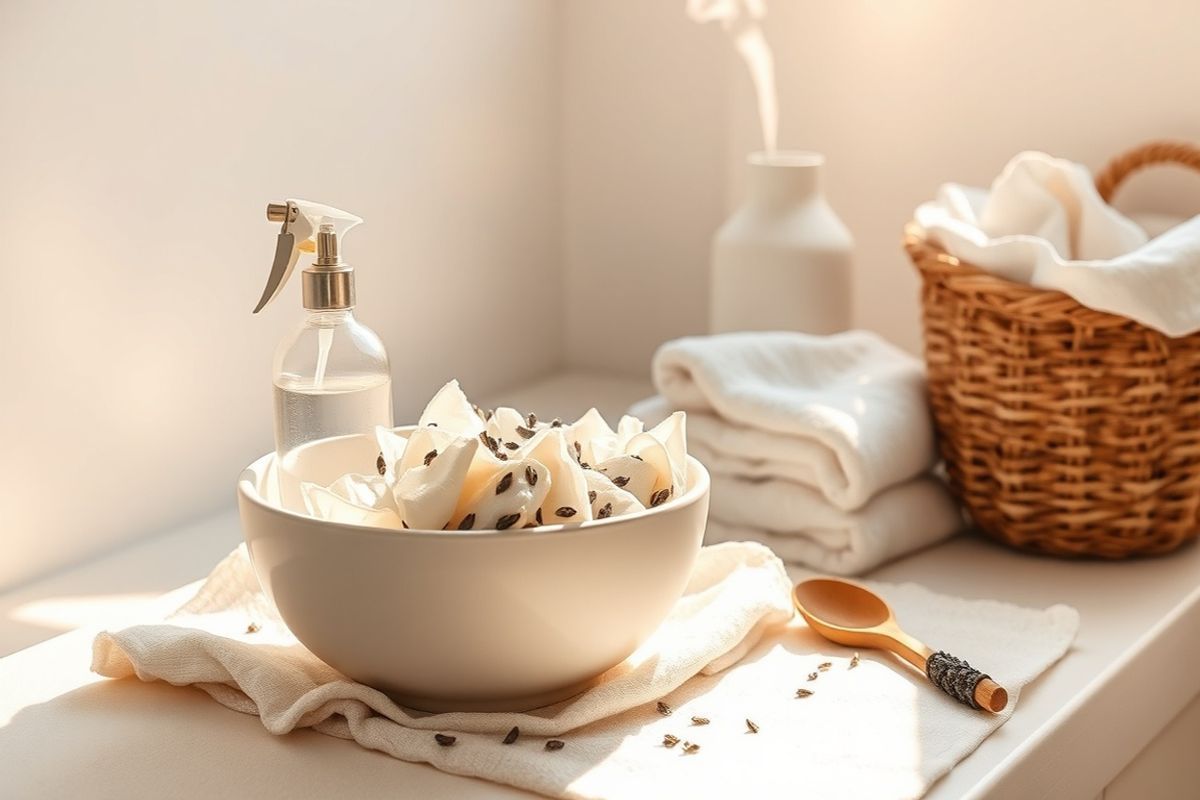
Are you tired of spending money on disposable fabric softener sheets that end up in the trash after one use? Reusable fabric softener sheets are a fantastic eco-friendly alternative that not only saves you money but also reduces waste. In this guide, we’ll walk you through everything you need to know about making your own reusable fabric softener sheets using natural ingredients. By the end, you’ll have a sustainable laundry solution that’s gentle on your clothes, your wallet, and the planet.
Materials Needed
Before you start, gather these simple and affordable materials:
- Fabric: Use old cotton T-shirts, flannel pajamas, or any soft, absorbent fabric you have lying around. Avoid synthetic fabrics like polyester, as they won’t absorb the solution well.
- Scissors: Fabric scissors work best to cut clean edges.
- Ruler or measuring tape: For consistent sizing.
- Fabric marker or chalk: To mark cutting lines.
- Essential oils (optional): Lavender, eucalyptus, or lemon oils for a fresh scent.
- White vinegar: Acts as a natural fabric softener and deodorizer.
- Distilled water: Purified water ensures no mineral buildup on your clothes.
- Spray bottle: For applying the fabric softener solution.
- Sewing machine or needle and thread (optional): If you want to hem the edges to prevent fraying.
Preparation Steps
Before assembling your reusable fabric softener sheets, prepare the fabric softener solution. This step ensures your sheets are ready to use right away.
Step 1: Make the Fabric Softener Solution
In a spray bottle, combine the following ingredients:
- 1 cup of distilled water
- 1/2 cup of white vinegar (helps soften fabric and remove odors)
- 10-15 drops of essential oil (optional, for fragrance)
Shake the bottle well to mix the ingredients thoroughly. The vinegar smell will dissipate once dry, leaving your clothes fresh and soft.
Step 2: Cut the Fabric
Lay your fabric flat on a clean, dry surface. Using a ruler or measuring tape, mark and cut squares or rectangles measuring approximately 8x8 inches or 10x10 inches. Adjust the size based on your preference and the size of your dryer.
If you’re using an old T-shirt or fabric with stretch, cut the pieces slightly larger to account for shrinking. If you want to prevent fraying, you can hem the edges by folding them inward and sewing a simple stitch around the perimeter. Alternatively, you can leave the edges raw—most fabrics won’t fray excessively if they’re made from cotton or flannel.
Assembly
Now it’s time to assemble your reusable fabric softener sheets. This step is straightforward and quick.
Step 3: Fold and Store the Fabric
Fold each fabric square in half to create a smaller rectangle. This makes it easier to store and handle. You can stack them neatly in a small basket or container near your dryer.
Alternatively, if you prefer a more compact option, fold them into thirds or quarters, similar to how store-bought dryer sheets are packaged. This makes it easy to toss one or two into the dryer with your laundry.
Step 4: Add the Fabric Softener Solution
Before placing a fabric square into the dryer, lightly mist it with the fabric softener solution. You only need a few sprays—just enough to dampen the fabric without soaking it. Too much liquid can leave residue on your clothes or make them take longer to dry.
If you’re using essential oils, choose scents that complement your laundry routine, such as lavender for a calming effect or eucalyptus for a refreshing aroma.
Mistakes to Avoid
While making reusable fabric softener sheets is simple, there are a few common mistakes to watch out for to ensure the best results:
- Using too much solution: Over-saturating the fabric can lead to damp clothes or residue buildup. A light mist is all you need.
- Choosing the wrong fabric: Avoid synthetic fabrics like polyester, as they don’t absorb the solution well and may not dry properly. Stick to natural fibers like cotton or flannel.
- Skipping the essential oil (if desired): While not necessary, essential oils can add a pleasant scent to your laundry. If you skip them, your clothes will still be soft and static-free.
- Not storing the sheets properly: Keep your fabric softener sheets in a dry, airtight container to prevent them from drying out or picking up odors from other items in your laundry room.
Pro Tips
Make the most of your reusable fabric softener sheets with these pro tips:
- Rotate scents: Change the essential oil in your fabric softener solution to match the season or your mood. For example, use citrus oils in the summer and pine or cinnamon in the winter.
- Add a wool dryer ball: For an extra boost, toss a wool dryer ball into the dryer with your fabric softener sheet. This helps distribute the heat and soften clothes even more while reducing static.
- Wash and reuse: After each use, toss the fabric softener sheet into the washing machine with your next load of laundry. This keeps them fresh and ready for reuse. Wash them with vinegar to remove any residual buildup.
- Customize the size: If you have a smaller dryer, cut your fabric squares smaller to fit. For larger loads, use two sheets side by side.
- Store in a visible spot: Keep your fabric softener sheets in a small basket or jar near your dryer so they’re always within reach when you need them.
By following these tips, you’ll extend the life of your reusable fabric softener sheets and keep your laundry routine running smoothly.
Reusable fabric softener sheets are a game-changer for anyone looking to reduce waste and save money on laundry expenses. With just a few simple materials and steps, you can create a sustainable solution that’s gentle on your clothes and the environment. Plus, the fresh scents from essential oils make your laundry smell amazing without the harsh chemicals found in store-bought options.
Start making your own reusable fabric softener sheets today and enjoy softer clothes, a lighter laundry load, and the satisfaction of knowing you’re doing your part for the planet. Happy laundering!