Introduction
Fabric softeners are a laundry staple, but many store-bought options contain harsh chemicals that can irritate sensitive skin or linger in fabrics. A quick-dry fabric softener is not only gentler but also helps your clothes dry faster, reducing energy costs and wear on fabrics. Making your own at home is simple, cost-effective, and eco-friendly. In this tutorial, we’ll guide you through creating a natural, quick-dry fabric softener using easy-to-find ingredients.
Materials Needed
- 1 cup white vinegar (or apple cider vinegar)
- 1 cup baking soda
- 10-15 drops essential oil (optional, for fragrance)
- A large mixing bowl
- A whisk or spoon
- A funnel (optional)
- A spray bottle or storage container
Preparation Steps
Step 1: Gather Your Ingredients
Before you begin, ensure you have all the necessary ingredients and tools. Vinegar acts as a natural fabric softener and deodorizer, while baking soda helps neutralize odors. Essential oils add a pleasant scent, but they’re optional if you prefer a fragrance-free softener.
Step 2: Mix the Base Ingredients
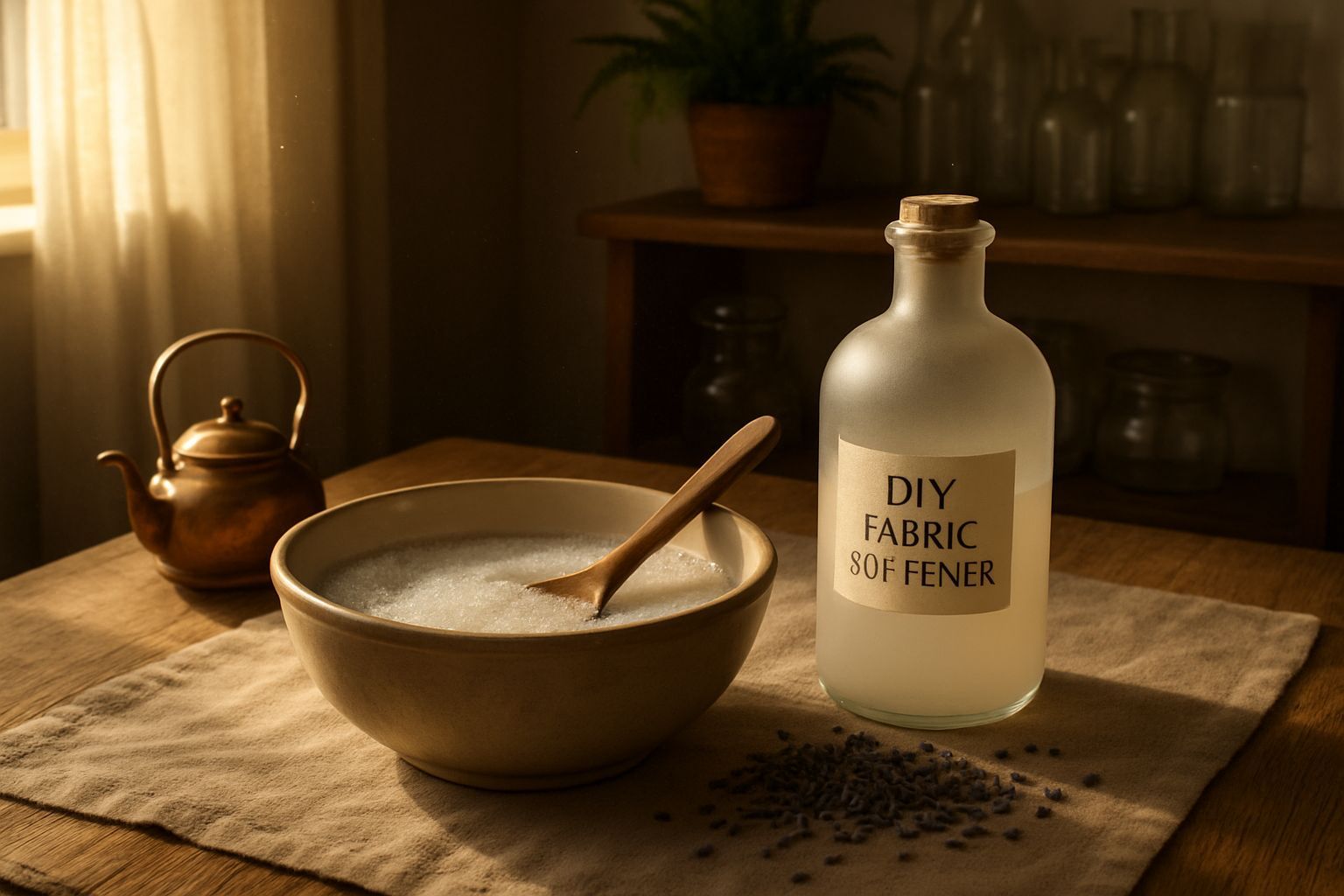
In a large mixing bowl, combine the vinegar and baking soda. Stir gently at first, as the mixture may fizz. Continue mixing until you achieve a smooth, paste-like consistency. If you’re using essential oils, add them now and stir well to distribute the fragrance evenly.
Assembly
Step 3: Transfer to a Storage Container
Using a funnel (or carefully pouring), transfer the mixture into a spray bottle or airtight container. If you’re using a spray bottle, this will make it easy to apply the softener directly to your laundry. If you prefer a liquid softener, you can dilute the mixture with water before use.
Step 4: Label and Store
Label your container with the contents and date. Store it in a cool, dry place away from direct sunlight. This softener can last for several months if stored properly.
Mistakes to Avoid
1. Using too much vinegar can leave a lingering smell, even after drying. Stick to the recommended ratio.
2. Adding too many essential oils can cause skin irritation or leave residue on fabrics. Stick to 10-15 drops per cup of mixture.
3. Not shaking or stirring the mixture well before use can lead to uneven distribution of ingredients.
Pro Tips
1. For extra softness, add a few tablespoons of glycerin to the mixture.
2. If you prefer a liquid softener, dilute the mixture with 1-2 cups of water before use.
3. To enhance the quick-dry effect, add a teaspoon of rubbing alcohol to the mixture.
4. For a fabric-safe alternative to vinegar, you can use witch hazel or aloe vera juice.
Conclusion
Making your own quick-dry fabric softener is a simple, cost-effective way to improve your laundry routine while avoiding harsh chemicals. This homemade solution is gentle on fabrics, skin-friendly, and helps reduce drying time. With just a few basic ingredients, you can create a custom softener tailored to your preferences. Try it today and enjoy softer, fresher laundry without the guilt of chemical-laden products!