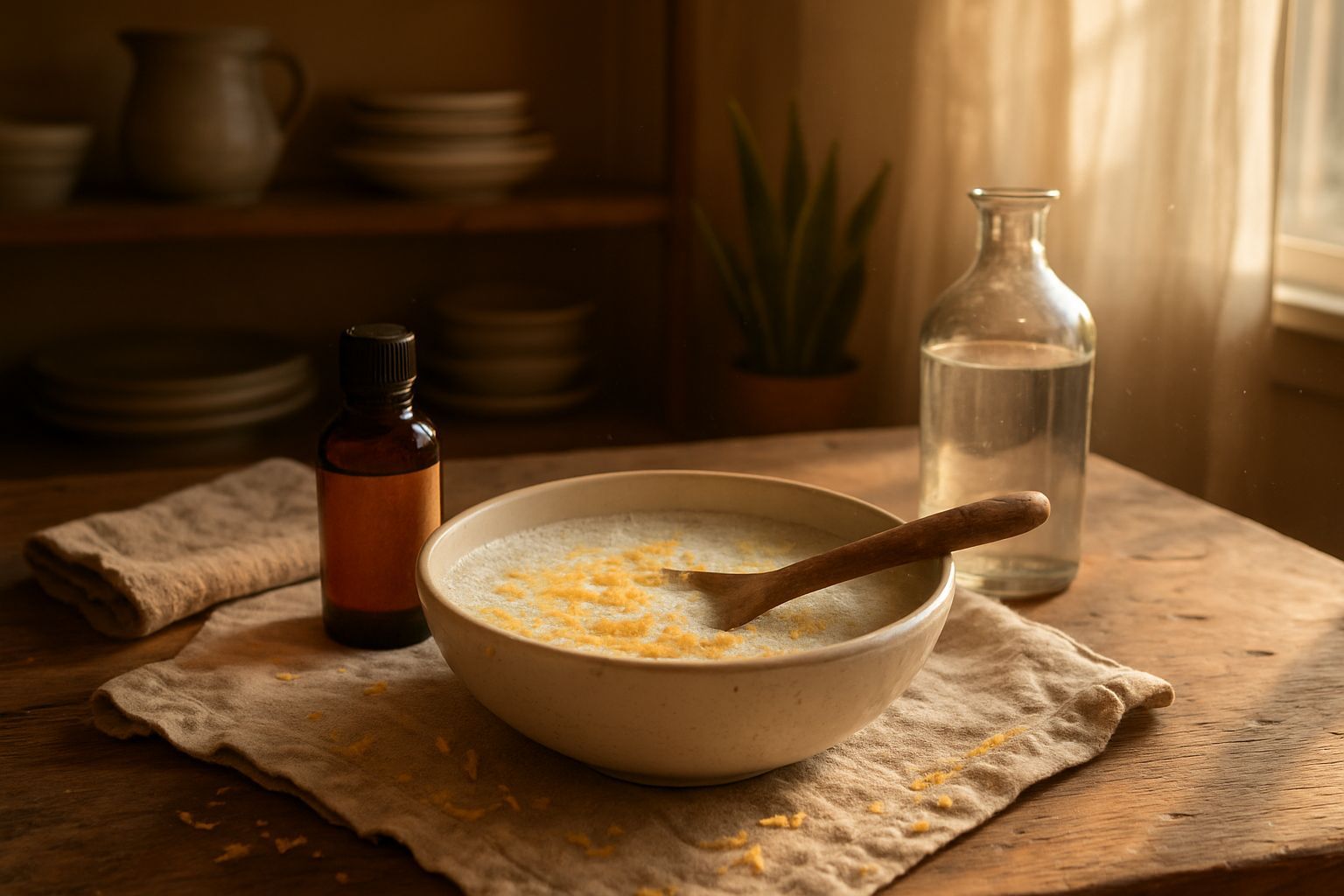
Introduction
Tired of harsh chemical dish soaps that leave your hands dry and your dishes with a lingering scent? Making your own concentrated lemon dish soap is a fantastic way to enjoy a natural, fragrant, and effective cleaning solution. Lemon not only adds a fresh citrus aroma but also has natural degreasing properties that help cut through tough grime. In this tutorial, we’ll guide you through the process of creating a powerful, eco-friendly dish soap that’s gentle on your skin and tough on grease.
Materials Needed
- 1 cup distilled water
- 1/2 cup liquid castile soap (unscented)
- 1/4 cup lemon juice (freshly squeezed is best)
- 2 tablespoons vegetable glycerin (optional, for extra moisturizing)
- 10-15 drops lemon essential oil (optional, for added fragrance)
- 1 teaspoon white vinegar (helps cut grease)
- A funnel
- A clean, empty dish soap bottle or container
Preparation Steps
Step 1: Gather Your Ingredients
Before you begin, make sure all your ingredients are ready. If using fresh lemons, juice them to extract about 1/4 cup of lemon juice. If you prefer a stronger lemon scent, you can add a few extra drops of lemon essential oil later.
Step 2: Mix the Base Ingredients
In a bowl, combine the distilled water, liquid castile soap, and vegetable glycerin (if using). Stir gently to avoid creating too many bubbles. This mixture will serve as the base of your dish soap.
Assembly
Step 3: Add the Lemon Juice and Vinegar
Slowly pour the lemon juice and white vinegar into the bowl, stirring continuously. The vinegar will help break down grease, while the lemon juice adds a natural freshness and extra cleaning power.
Step 4: Incorporate Essential Oils (Optional)
If you’re using lemon essential oil, add 10-15 drops to the mixture and stir well. This will enhance the lemony fragrance and provide additional antibacterial properties.
Mistakes to Avoid
To ensure your dish soap turns out perfectly, avoid these common mistakes:
- Using tap water instead of distilled water: Tap water can contain minerals that may affect the soap’s effectiveness and shelf life.
- Overheating the mixture: If you’re using glycerin, avoid heating it too much, as it can lose its moisturizing properties.
- Skipping the vinegar: Vinegar is key for cutting through grease, so don’t leave it out.
- Using too much essential oil: Excessive amounts can irritate the skin and make the soap overly fragrant.
Pro Tips
Here are some expert tips to make your dish soap even better:
- Double the lemon juice: For a stronger citrus scent and extra degreasing power, increase the lemon juice to 1/2 cup.
- Add a touch of honey: A teaspoon of honey can add a mild antibacterial effect and a subtle sweetness to the soap.
- Use a soap dispenser with a pump: This makes it easier to dispense the soap without spills.
- Store in a cool, dark place: This helps preserve the natural ingredients and extends the soap’s shelf life.
Conclusion
Making your own concentrated lemon dish soap is a simple, cost-effective, and eco-friendly way to keep your dishes sparkling clean. With just a few natural ingredients, you can create a powerful cleaning solution that’s gentle on your skin and tough on grease. Plus, the refreshing lemon scent will make dishwashing a more enjoyable experience. Give this recipe a try and enjoy the benefits of homemade, chemical-free dish soap!