Introduction
Materials Needed
- Hexagonal mirror tiles
- Mirror adhesive or construction adhesive
- Level
- Measuring tape
- Pencil
- Screwdriver
- Drill (if needed)
- Safety glasses
- Gloves
- Cleaning supplies (rubbing alcohol, cloth)
Preparation Steps
Step 1: Plan Your Layout
Before you start, decide on the size and shape of your hexagonal tile mirror. Measure the wall space where you want to install it and mark the center point. Use a level to ensure the mirror will be straight. Sketch a rough outline of the hexagonal pattern to visualize the final look.
Step 2: Clean the Wall Surface
Clean the wall thoroughly with rubbing alcohol to remove any dust, grease, or debris. A clean surface ensures better adhesion. Allow the wall to dry completely before proceeding.
Assembly
Step 3: Apply Adhesive
Apply a small amount of mirror adhesive to the back of each hexagonal tile. Be careful not to use too much adhesive, as it can seep out and create a mess. Use a toothpick or small tool to spread the adhesive evenly.
Step 4: Attach the Tiles
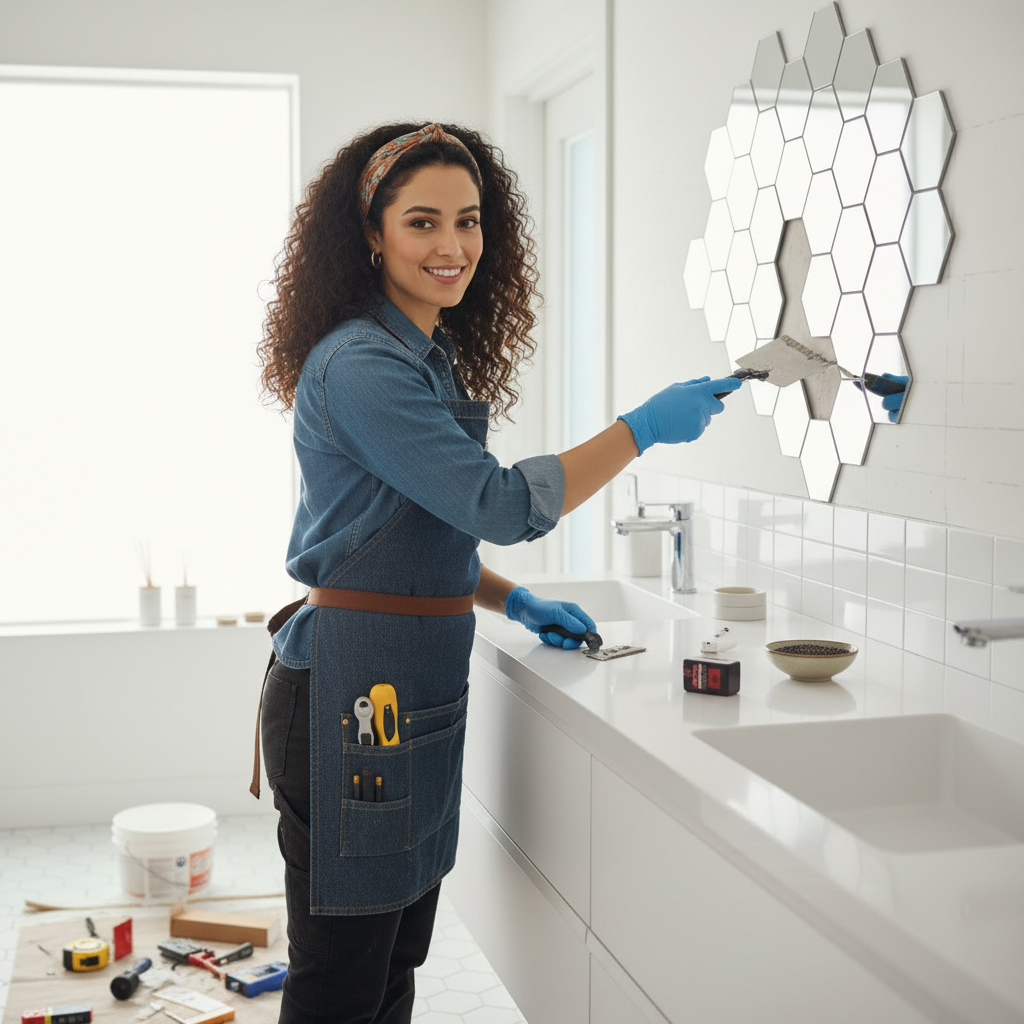
Starting from the center point, press each hexagonal tile firmly onto the wall. Use a level to ensure each tile is aligned correctly. Continue adding tiles, working outward in a hexagonal pattern. Allow the adhesive to dry according to the manufacturer's instructions before handling the mirror.
Mistakes to Avoid
1. Not measuring accurately: Ensure all measurements are precise to avoid gaps or misalignment. 2. Using too much adhesive: Excess adhesive can cause bubbles or uneven surfaces. 3. Skipping the level: Always check for level to prevent a crooked mirror. 4. Rushing the drying process: Allow sufficient drying time for a strong bond.
Pro Tips
1. Use a grid or stencil to help with alignment. 2. Work in small sections to maintain accuracy. 3. Consider using a mirror with pre-attached adhesive for easier installation. 4. If using individual tiles, ensure they are the same size for a uniform look.
Conclusion