Introduction
Materials Needed
- Plywood or MDF board (size depends on desired tabletop dimensions)
- Hinges (2-4, depending on size)
- Wood screws
- Drill with screwdriver bit
- Measuring tape
- Pencil
- Saw (hand saw or circular saw)
- Sandpaper (medium and fine grit)
- Wood finish or paint (optional)
- Wall anchors (if not mounting into studs)
- Level
- Stud finder
Preparation Steps
Step 1: Measure and Cut the Tabletop
Decide on the dimensions of your tabletop. Common sizes for wall-mounted tables are 12"-18" deep and 24"-48" wide. Use a measuring tape to mark the dimensions on your plywood or MDF board. Use a straight edge to draw clean lines, then carefully cut along the lines using a saw. Sand the edges smooth with medium-grit sandpaper, then finish with fine-grit sandpaper.
Step 2: Prepare the Tabletop for Folding
If you want the table to fold down flat against the wall, you’ll need to attach hinges. Decide where you want the hinges to be placed—typically along the back edge of the tabletop. Mark the hinge positions with a pencil, ensuring they are evenly spaced. Pre-drill holes for the hinge screws to prevent the wood from splitting.
Assembly
Step 3: Attach the Hinges
Position the hinges on the back edge of the tabletop and secure them with the pre-drilled screws. If you’re using multiple hinges, ensure they are aligned properly so the tabletop folds smoothly. Test the folding mechanism to make sure it moves freely without binding.
Step 4: Mount the Table to the Wall
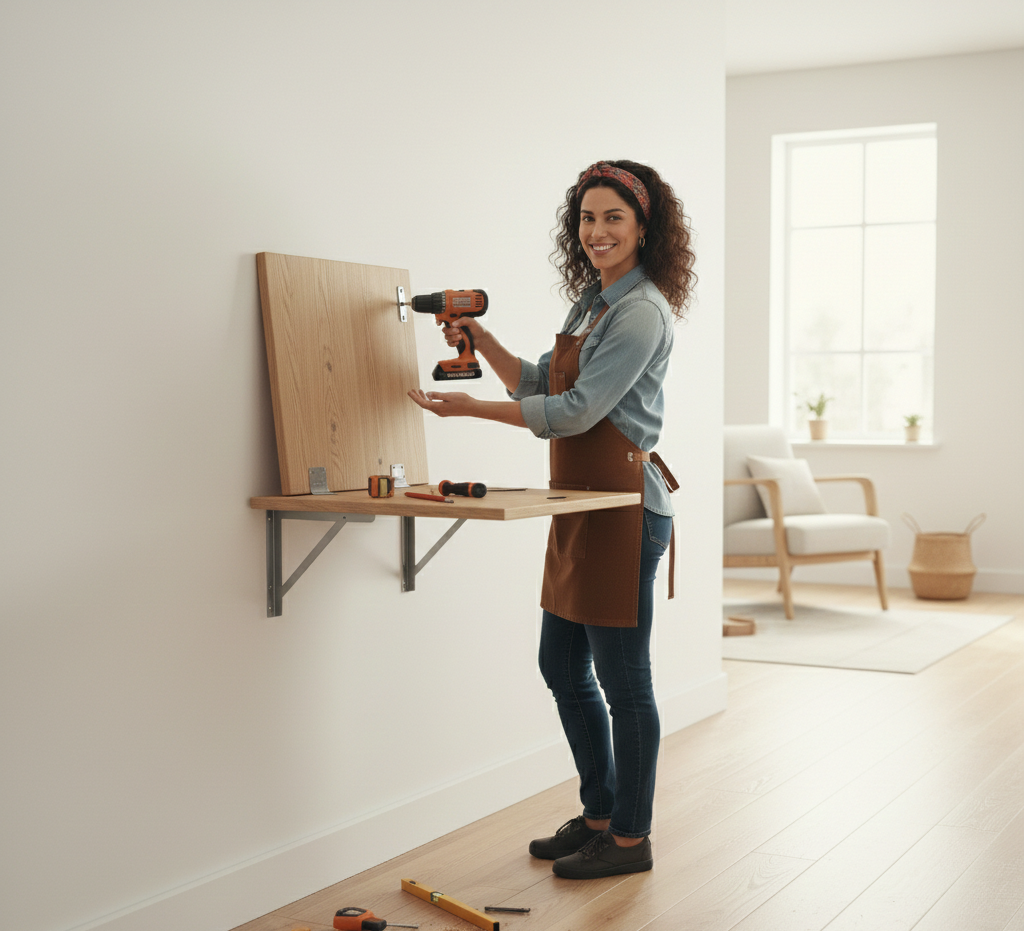
Use a stud finder to locate the studs in the wall where you plan to mount the table. Mark the stud locations with a pencil. Hold the tabletop in the desired position and mark the hinge attachment points on the wall. If you’re not mounting into studs, use wall anchors rated for the weight of your table. Pre-drill holes at the marked locations, then attach the hinges to the wall using screws. Test the table to ensure it folds up and down smoothly.
Mistakes to Avoid
1. Not securing the table to studs: If you don’t mount into studs, use heavy-duty wall anchors to support the weight. 2. Improper hinge placement: Hinges should be evenly spaced and aligned to prevent wobbling. 3. Skipping sanding: Rough edges can splinter or cause injury when folding the table. 4. Overloading the table: Avoid placing heavy items on the table if it’s not securely mounted.
Pro Tips
1. Add a lip or edge to the tabletop to prevent items from sliding off when folded down. 2. Use a drop-down leaf mechanism for extra tabletop space when needed. 3. Paint or stain the tabletop to match your decor. 4. Install a small shelf or storage below the table for added functionality.
Conclusion
A foldable wall-mounted table is a fantastic way to maximize space in small living areas. With just a few tools and materials, you can create a functional and stylish piece of furniture that folds away when not in use. Follow these steps carefully, and you’ll have a space-saving solution that works for your home. Happy DIY-ing!